Japan, final thoughts
27 October to 19 November 2026
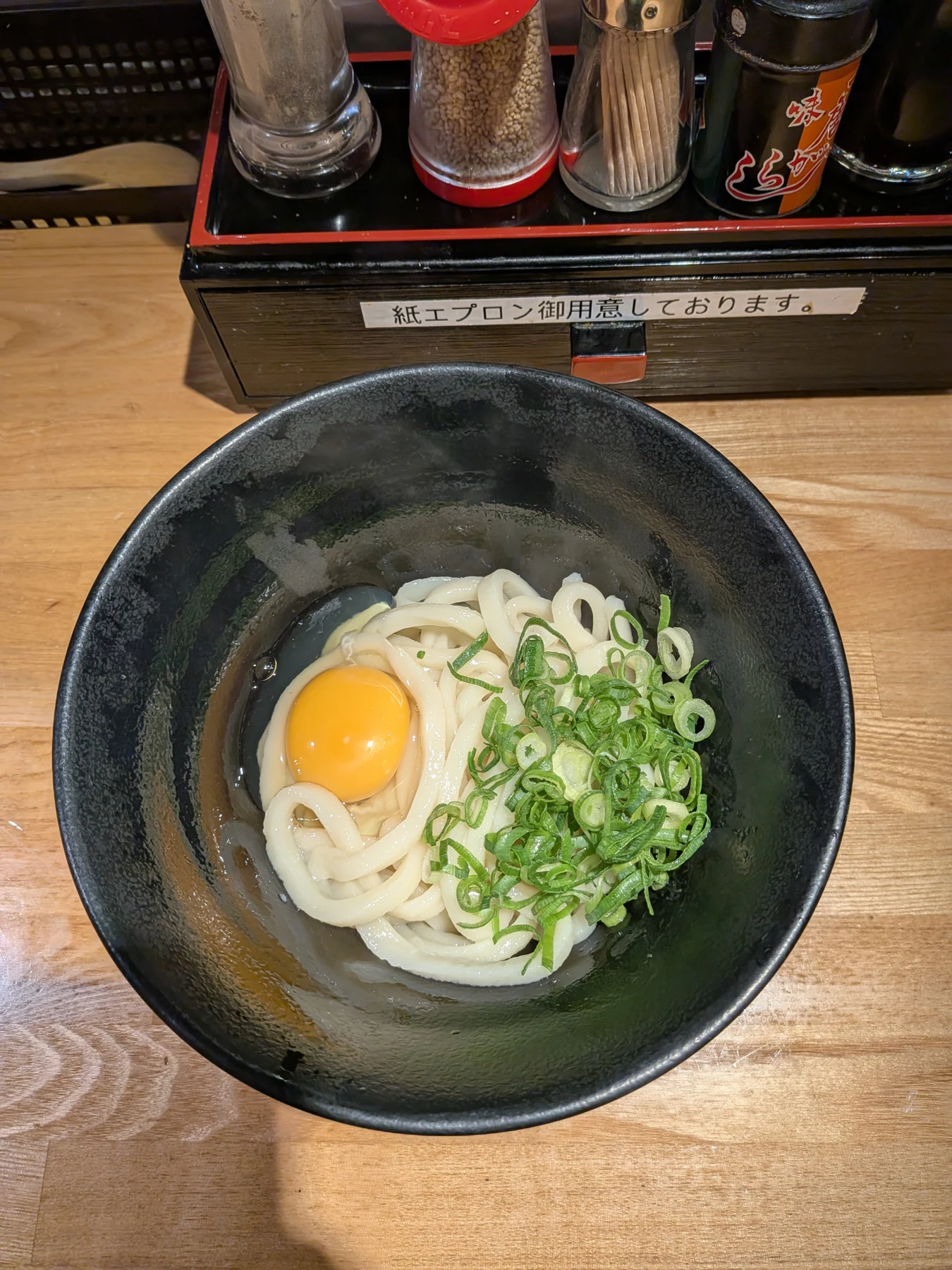
After three weeks in Japan, the meal I wanted before going to the airport was a bowl of udon with an egg. I'd had beautiful sushi for lunch, watched a single act of kabuki, drunk coffee that felt as if it had taken half the afternoon to make, and walked around Hamarikyū Gardens as the sun was going down. Then I went back to Udon Denji near my hotel and ordered kamatama. I stirred the egg through the hot noodles and sat there very happy with my decision. It was about as satisfying a last meal as I could have had.
What I thought I'd be eating
I came to Japan with high expectations for the food. Friends had told me how good it was, and everything I'd read gave me the same impression. But if you'd asked me what I wanted to eat, I could probably have named sushi, ramen and wagyu before running out of specifics. By the end I could tell you which bowls of udon I'd go back for, had opinions on different kinds of liver, and was still thinking about the sea urchin from my last lunch.
What surprised me was how much variety there was within things I'd thought of as a single dish. There were the almost aggressively chewy noodles in Takamatsu, the hot curry udon I wanted every time it rained, and the little bowl of noodles and egg I kept coming back to. I loved intensely fishy herring at the sushi counter in Ginza and the fatty, heavily spiced bone-in chicken I cut up with scissors in Takamatsu. In Kyoto, I ate delicate layers of yuba that practically melted in my mouth. I felt as if I'd barely started.
I also liked how easy it was to eat by myself. At Fugetsu in Takamatsu there were perhaps fifteen of us squeezed in, mostly at the counter. As far as I could tell, most people were there on their own. Aside from the slurping, it was almost silent. A lot of places had a queue or a list to put your name on, which made it clear what to do. Most of the places I missed were down to a queue I didn't feel like joining or opening hours that turned out to be wrong. I generally only needed reservations for the fancy meals. And after a while I grew to like the restrained scores on Tabelog. In London, it feels as though half the places I look at are somewhere between 4.2 and 4.8. I wish the numbers told me a little more.
I'm curious what I'll find when I order some of these dishes in London. A bowl of noodles can travel. The feeling of sitting shoulder to shoulder with people quietly eating lunch on their own is harder to bring with it. The same goes for an izakaya. Part of what I enjoyed about dinner with Katia was ordering a few small plates, talking for a while, then seeing what else we felt like. It seems obvious now how much that rhythm was part of the meal.
Getting the hang of it
I take the Tube all the time in London. In Yokohama I ran to the platform, made the train, and went in the wrong direction. There was English signage and I'd travelled enough to know that missing a train is rarely the end of the world. Even so, at the beginning I spent a fair bit of time worrying about connections and what I'd do if I missed one.
Some of my desire to move around less came from that anxiety. By the time I got to Takamatsu, I'd been on the Shinkansen a few times and had a much better idea of how stations and tickets worked. Another train felt far less taxing by then. I'd still give myself more time in each place on a second trip, partly because it takes a few days to get into the habit of going back to somewhere you like. I could easily have spent another night in Osaka. But I'd also be able to take a more complicated journey in my stride.
I'm glad I started in Asagaya. I could walk along the river, find a coffee shop that felt like a local and make a few manageable mistakes. It was new without being overwhelming. Staying in Akihabara at the end felt like seeing another city. In both cases I spent a few days getting to know the streets around where I was staying, and I've still barely touched Tokyo.
The rules were part of the experience
The first person I saw organising things in Japan was at the taxi rank at Haneda, directing the cars and passengers with a light. Later I noticed people doing the same thing for traffic around construction sites. I sometimes called all of this “efficient”, but that word leaves out a lot. Some of it took more time or required more staff. What I was responding to was how much care went into making it clear what you were expected to do.
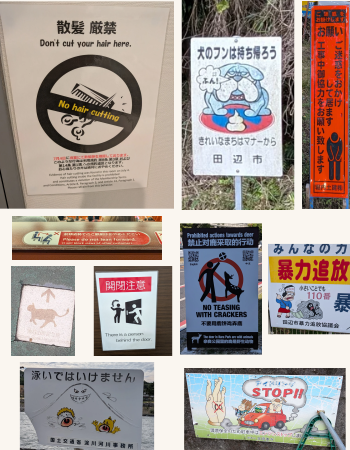
Sometimes you got it by watching people. On trains, people kept their voices down and paid attention to where their bags went. At the gym, a sign told you to use the changing room even to take off a jacket, and that was what people did. At the theatre, the notice asked you to “Please do not lean forward” so the person behind you could see. People stayed back in their seats. I found pictograms useful for things like recycling and litter. Others were worth photographing mostly because the cartoons made me laugh.
My favourite was in a shower. “Don't cut your hair here,” it said, above a picture of a comb and scissors. Underneath was the reason for the notice: evidence of hair cutting had been found in the room on 4 July. I loved that they had put the date on it.
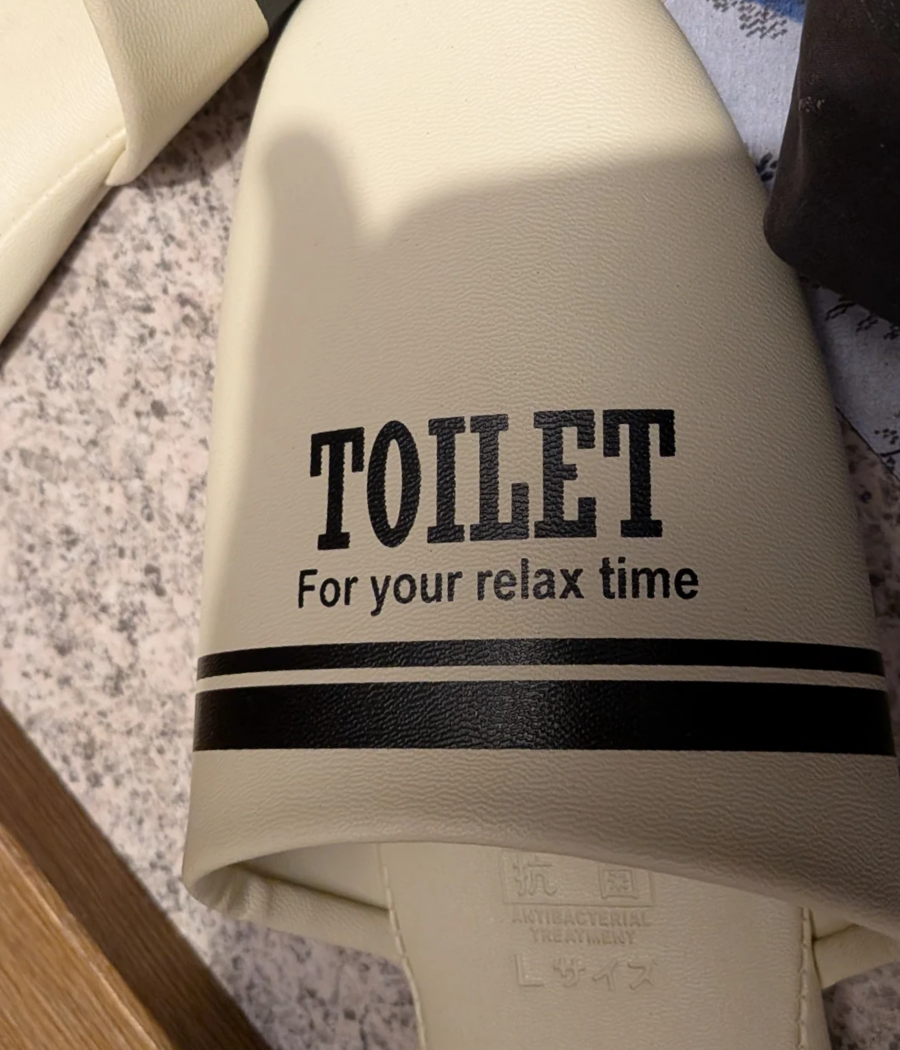
There were rules for slippers too. At temple lodgings and guesthouses I'd take off my shoes, use the slippers where I was supposed to and take them off again before stepping onto tatami. There often weren't any big enough for me. Then there were the separate toilet slippers. One pair said “TOILET” in big letters, with “For your relax time” underneath.
There was a feeling I kept coming back to: “We want you here and you can explore, but you are in our system and you must obey.” I felt both sides of it. Many of the rules made it easier to travel on my own. I usually had a good idea of where to stand, how to order or what to do next. But I could also feel how conspicuous I'd be if I got it wrong. And when the system wasn't obvious, like the Japanese-only noodle ticket machine in Akihabara, I was very glad I could photograph the buttons and get help working out which one meant curry udon with an egg.
A few everyday surprises
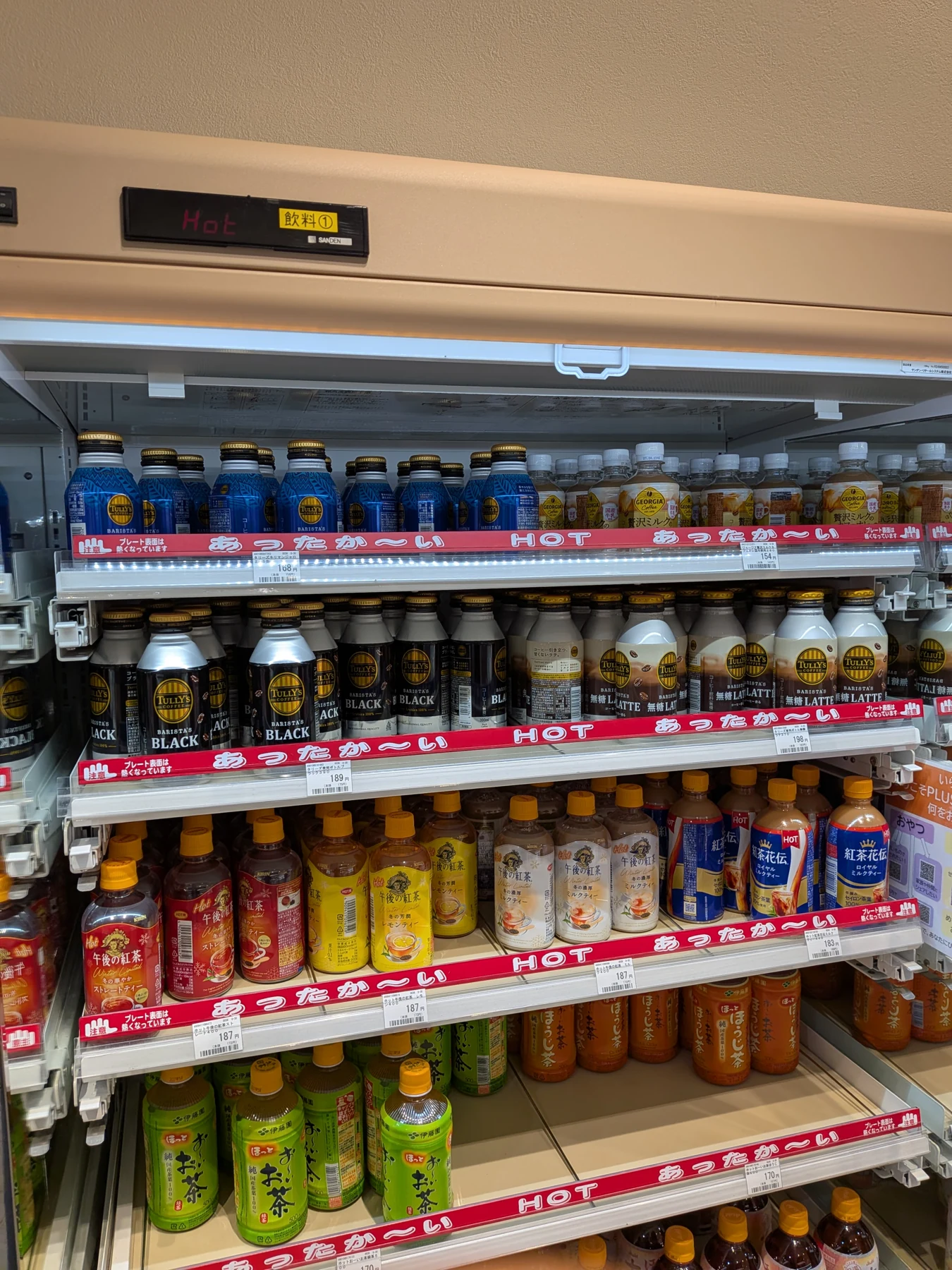
I expected to need cash in rural Shikoku. I was more surprised by how often I needed it in Tokyo, starting with a bakery and a ramen shop in Asagaya. I also ended up going to convenience stores far more than I used vending machines. There was nearly always a 7-Eleven nearby, and I often found it cheaper. I'd already seen how useful convenience stores were in Taiwan and Vietnam, but the hot drinks section in Japan blew my mind. There was a whole cabinet of warm bottles and cans, right there ready to take away.
I did a fair amount of supermarket gawping. The tomatoes seemed expensive, the apples were enormous and expensive, and the cheese shelf made me laugh after being in Italy. I saw plenty of Italian and Italian-influenced restaurants. I'm sure some of them are excellent. Having just been in Italy, I was happy to spend my finite number of dinners on things I had less chance of finding at home.
The coffee was a trip in itself. I could get a perfectly decent cup from 7-Eleven, go somewhere with six different beans to smell before choosing, or sit at the counter at Café de l’Ambre and watch someone pour water in a fine stream into a cloth filter. The coffee there was expensive and there wasn't much of it. I was very happy to have gone. It felt like stepping into the 1960s for a small, dark cup of coffee. I also liked the listening cafés and bars I found. A few had signs asking people to keep conversations low. I liked being somewhere that made a point of listening to a record properly, even if some places had little on offer if you didn't drink alcohol.
Where the crowds were
A lot of things felt inexpensive coming from London, and the weaker yen helped. I'd wondered how much that explained the increase in visitors, but arrivals were already climbing rapidly before the more recent drop in the yen. Japan went from about eight million international arrivals in 2012 to nearly 32 million in 2019. In 2025 it was nearly 43 million. Looking at the lines together made it clearer to me how much of the rise had happened before 2022.
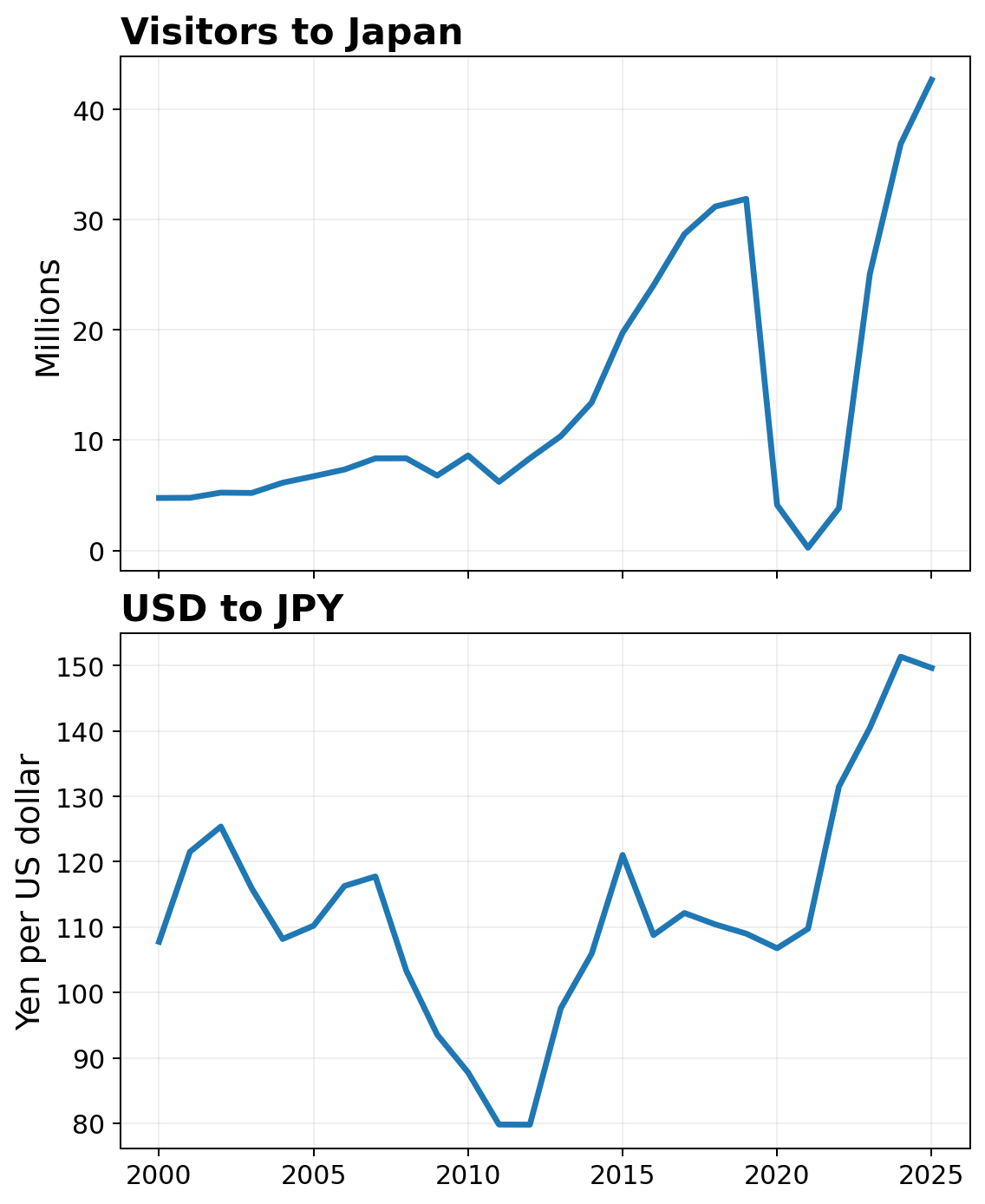
Sources: JNTO · Federal Reserve via FRED
Some of the temples in Kyoto got busy in the middle of the day, and I would have had a very different Kumano Kodo trip if I'd been able to get the trail accommodation I wanted. There have been real problems at particular spots, including around Mount Fuji. Even so, the places I went didn't feel overwhelmed for most of the time I was there. And I kept running into Japanese people on their own trips, including at Sunriver Oboke and at the temple where I stayed in Koyasan. It was worth remembering how little I could infer about who was travelling just from seeing a crowded place.
Kyoto felt touristy in parts, but I loved how much care went into things there, from the food to the craft shops. I probably wouldn't go back to the deer park in Nara. I would happily go back to Uji for a walk by the river and more matcha. Osaka felt edgier, and parts of it felt even more geared towards selling things to visitors than Kyoto did. I liked it, and I left just as I was starting to feel settled.
The trip I ended up taking
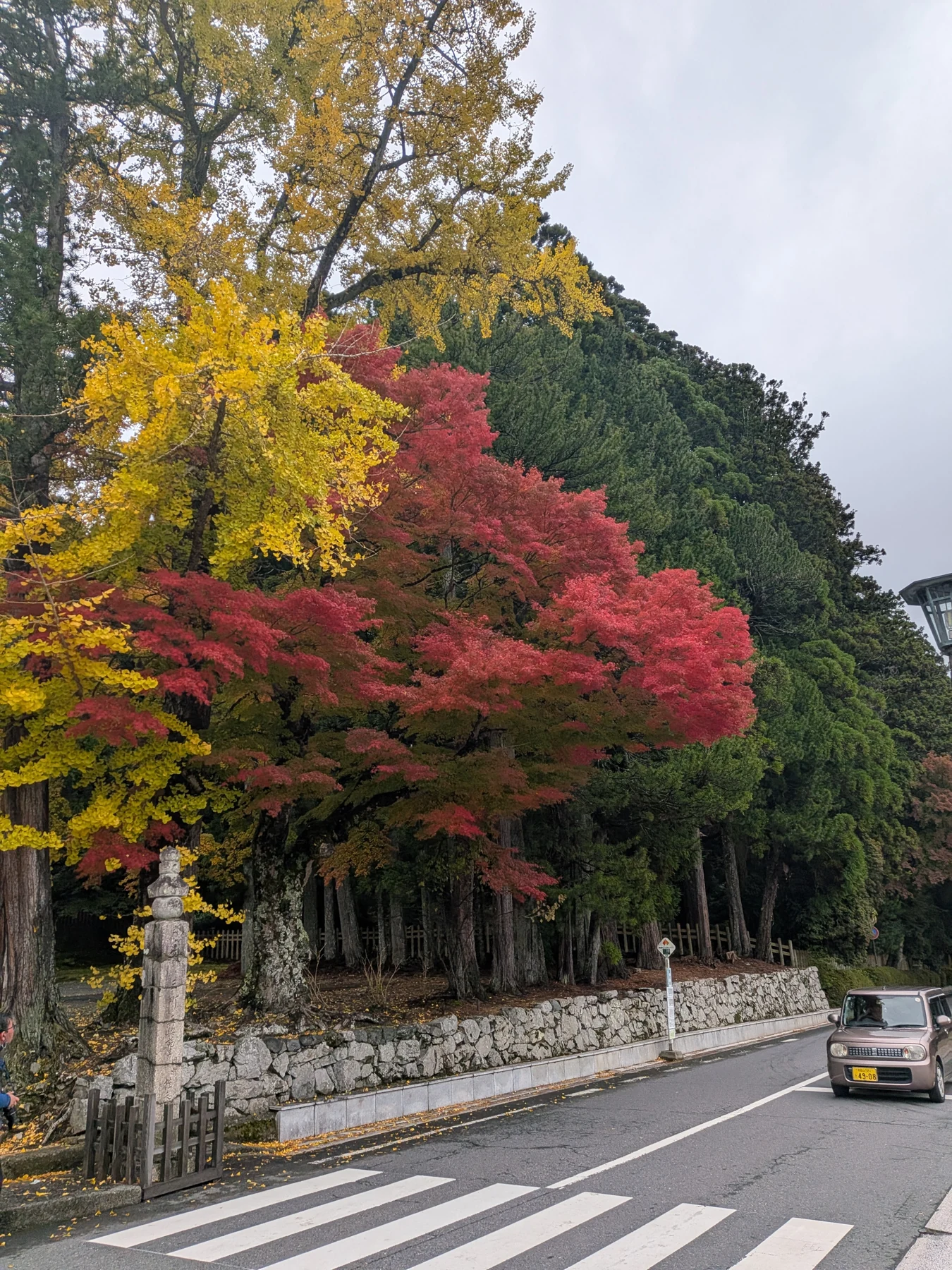
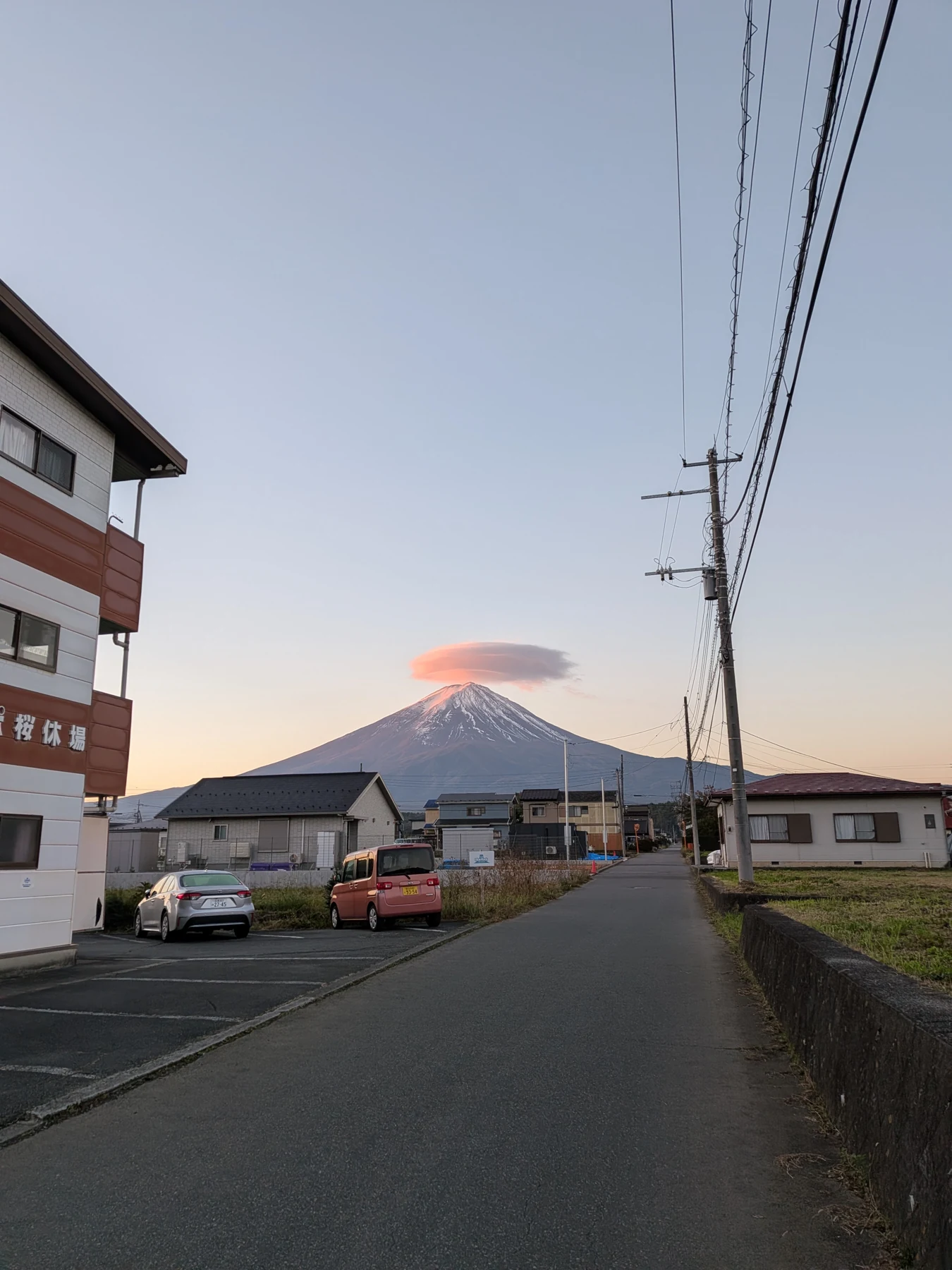
The days were short, but for much of November it was warm and sunny. I hadn't realised how mountainous Japan would feel. One day I was looking for lunch in a city and the next I could be walking through a forest or looking across a valley. Even on city days there was often a canal to walk along or a hill I could get up. I liked being able to come out of a quiet few days and get excited about finding a new restaurant again.
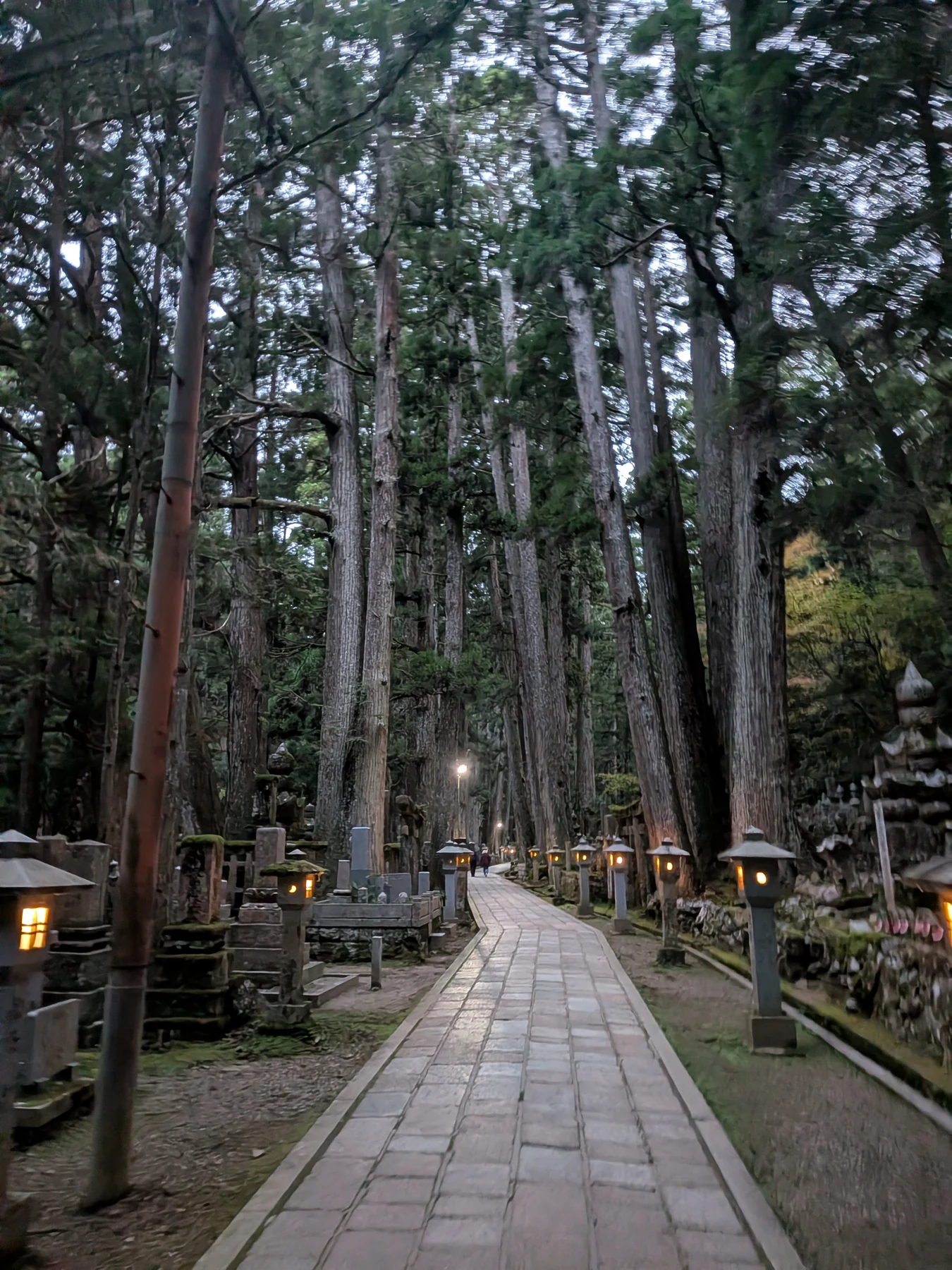
I'd been frustrated that I couldn't book four nights' worth of guesthouses along the Kumano Kodo. There was a lot of paperwork even for the part I did book. Once I got there, the people running it knew where I was supposed to be and helped me get there, and I felt looked after. In the end a taste of the trail and a stay at a temple in Koyasan were an excellent balance. I'm glad I didn't spend five full days hiking on this trip. I'd still like to come back to walk the whole Nakahechi section, and Koyasan would be high on my list for a return.
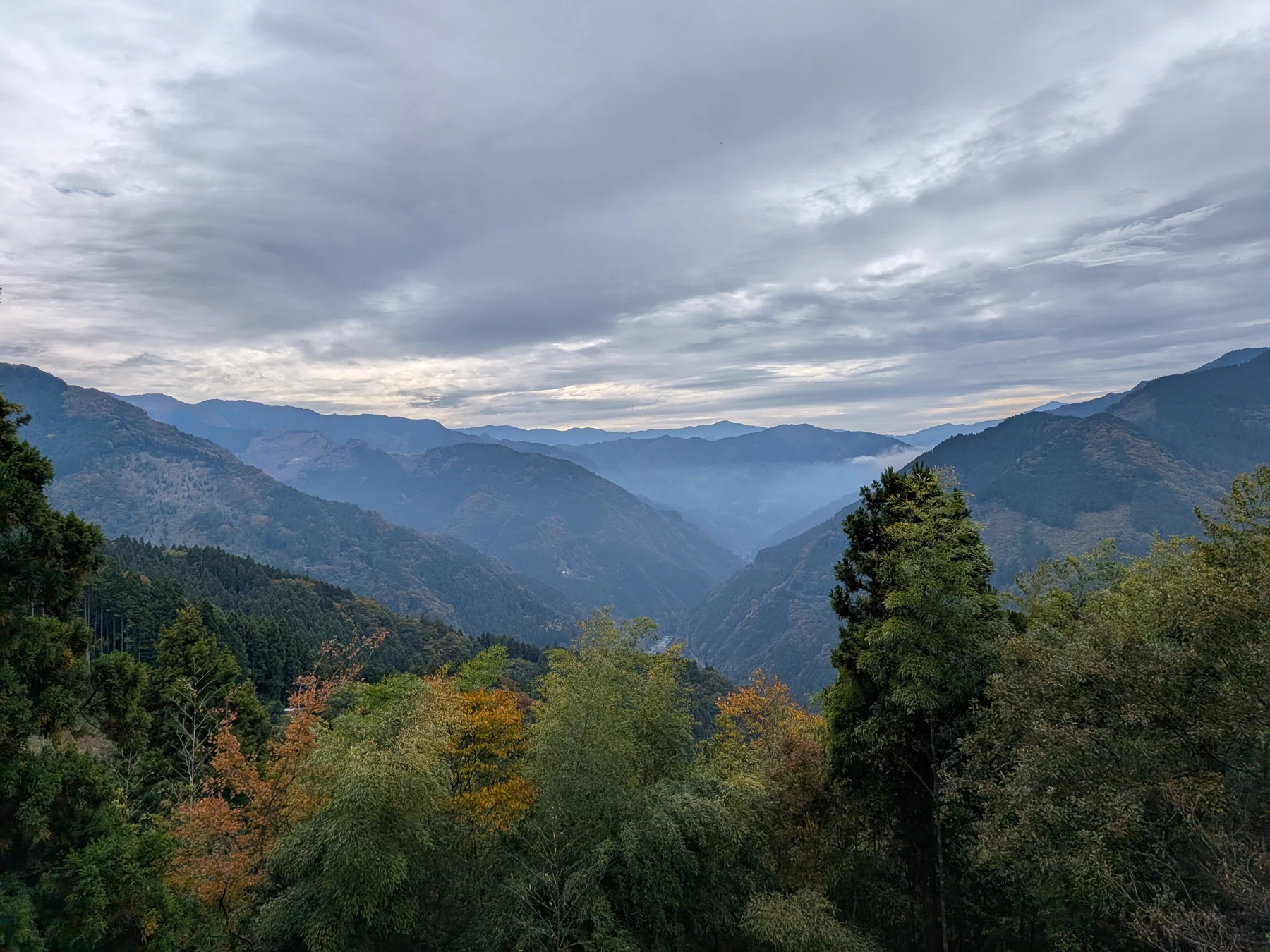
The Iya Valley was the least social part of the trip. Sunriver Oboke made sense as a place to stay and eat, but it was a big hotel, and dinner wasn't set up for talking to other guests. There weren't many places nearby to go and find a conversation, either. And then I hitchhiked twice and had two of the kindest encounters of the trip. One man, who told me he was a poet, drove about half an hour in the opposite direction from where he was headed. We talked about haiku and places he liked in Japan. He wouldn't take any money. I told Katia about it later because I was still thinking about it.
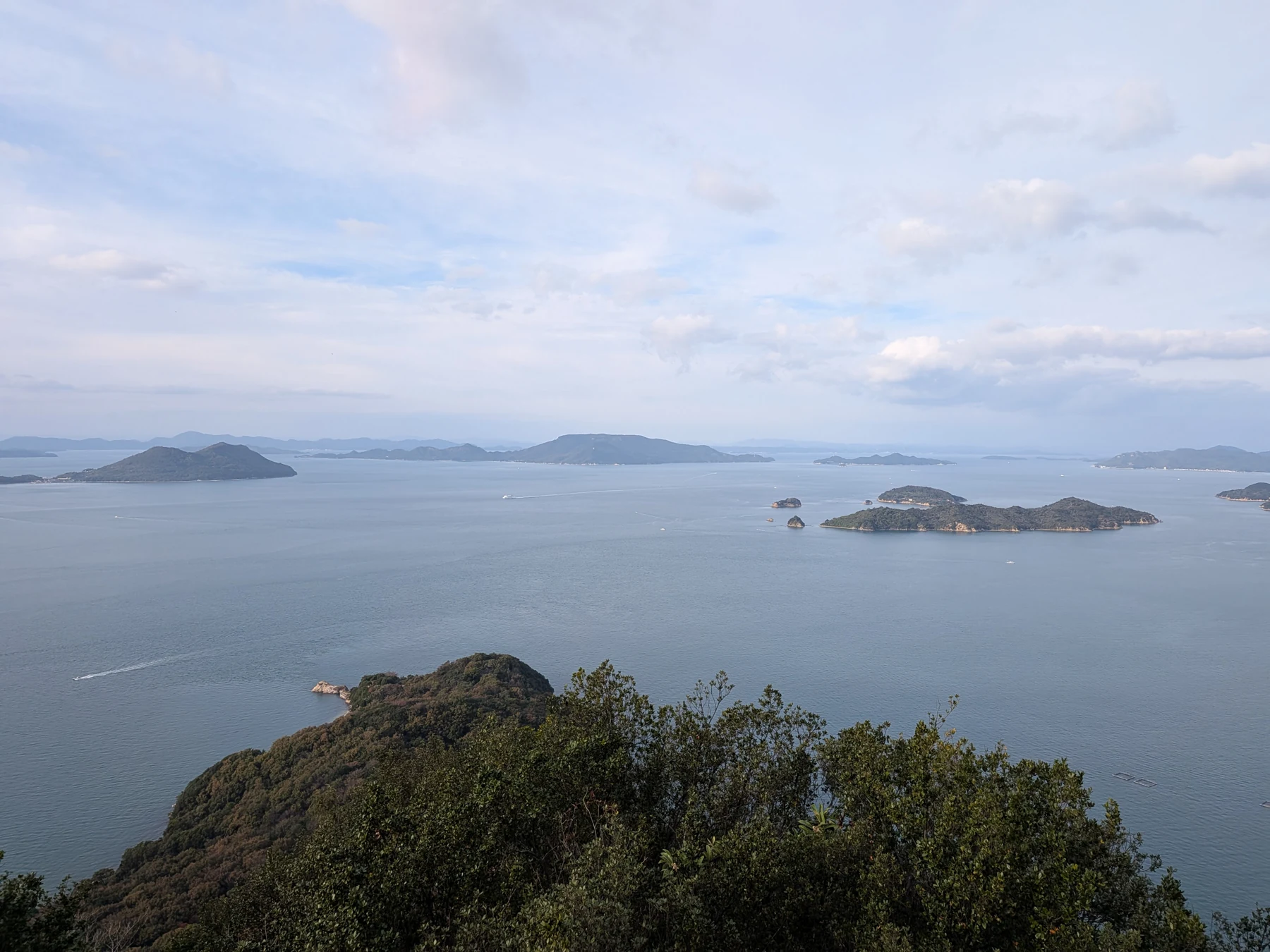
I think I got about as much company as I wanted across the three weeks. I loved swapping stories with people from Japan and travellers from elsewhere, and I also loved being able to spend a whole day walking around on my own and eat whatever I felt like afterwards. I'd give Tokyo longer next time. I'd like to see the Japanese Alps, and go farther west to Hiroshima and Nagasaki. There are places I'd happily revisit and plenty I don't know much about yet.
At Haneda I was ready to be home, preferably without the flights in between. I was also sad it was over. I wish I could go back to that first morning in Asagaya and do the whole thing again without knowing what was coming. Since I can't, I suspect I'll just have to come back.